This paper-cut is 8x8 inches. It has two cut layers, plus a background. The verse in the paper-cut is from Shir HaShirim (Song of Songs)- "כשושנה בין החוחים כן רעיתי בן הבנות, כתפוח בעצי היער כן דודי בין הבנים". Translated- As a lily among the thorns, so is my love among the daughter. As an apple tree among the trees of the wood, so is my beloved among the sons. The design depicts both the apple tree and the lilies together.
Saturday, June 29, 2013
Tuesday, June 18, 2013
Musical Squares
This paper-cut is 8x8 inches. It has two cut layers, plus a background. The bottom layer is geometrical pattern with all sorts of musical notes and notations. The curved musical instruments in the top layer give the paper-cut a softer tone.
Both versions have verses from Tehillim on them.
Green and Brown - "זמרו לא-לוהים זמרו, זמרו למלכינו זמרו"
Purple and Blue - "כל הנשמה תהלל י-ה הללוי-ה"
Beige and Green- "נריעה לצור ישענו נקדמה פניו בתודה בזמרות נריע לו"
Really anything that has to do with music works.
Tuesday, June 11, 2013
Darashti
I think this my favorite so far.
The text on this papercut (bolded below) comes from a longer poem written by Rabbi Yehuda HaLevi (letters of Yehuda also bolded, showing the acrostic). The poem goes as follows (sorry, no translation this time):
יָהּ, אָנָה אֶמְצָאֲךָ?
מְקוֹמְךָ נַעֲלָה וְנֶעְלָם!
וְאָנָה לֹא אֶמְצָאֲךָ?
כְּבוֹדְךָ מָלֵא עוֹלָם!
הַנִּמְצָא בַקְּרָבִים
אַפְסֵי אֶרֶץ הֵקִים,
הַמִּשְׂגָּב לַקְּרוֹבִים,
הַמִּבְטָח לָרְחוֹקִים,
אַתָּה יוֹשֵׁב כְּרוּבִים,
אַתָּה שׁוֹכֵן שְׁחָקִים.
תִּתְהַלֵּל בִּצְבָאֲךָ –
וְאַתְּ עַל רֹאשׁ מַהֲלָלָם,
גַּלְגַּל לֹא-יִשָּׂאֲךָ
אַף כִּי חַדְרֵי אוּלָם!
וּבְהִנָּשְׂאֲךָ עֲלֵיהֶם
עַל כֵּס נִשָּׂא וָרָם,
אַתָּה קָרוֹב אֲלֵיהֶם
מִרוּחָם וּמִבְּשָׂרָם,
פִּיהֶם יָעִיד בָּהֶם,
כִּי אֵין בִּלְתְּךָ יוֹצְרָם.
מִי זֶה לֹא יִרָאֲךָ -
וְעַל מַלְכוּתְךָ עֻלָּם?
אוֹ מִי לֹא יִקְרָאֲךָ –
וְאַתָּה נוֹתֵן אָכְלָם?
דָּרַשְׁתִּי קִרְבָתְךָ,
בְּכָל-לִבִּי קְרָאתִיךָ,
וּבְצֵאתִי לִקְרָאתְךָ –
לִקְרָאתִי מצָאתִיךָ,
וּבְפִלאֵי גְבוּרָתְךָ
בַּקֹּדֶשׁ חֲזִיתִיךָ.
מִי יֹאמַר לֹא רָאֲךָ?
הֵן שָׁמַיִם וְחֵילָם
יַגִּידוּ מוֹרָאֲךָ
בְּלִי נִשְׁמַע קוֹלָם!
הַאֻמְנָם כִּי יֵשֵב
אֱ-לֹהִים אֶת-הָאָדָם?
וּמַה יַחְשֹׁב כָּל-חוֹשֵׁב,
אֲשֶׁר בָּעָפָר יְסוֹדָם –
וְאַתָּה קָדוֹשׁ יוֹשֵׁב
תְּהִלּוֹתָם וּכְבוֹדָם!
חַיּוֹת יוֹדוּ פִלְאֲךָ
הָעוֹמְדוֹת בְּרוּם עוֹלָם,
עַל רָאשֵׁיהֶם כִּסְאֲךָ –
וְאַתָּה נוֹשֵׂא כֻלָּם!
When I read the poem the feeling I thought he was trying to express is a longing for reaching a closeness to God, but at the same time embracing the fact that even though God is very much apart of every aspect of the world, he simply does not exist in the same sphere as we do and complete closeness will never be possible.
I took those expressions of love and longing and started in the middle with a rose. A rose is something very earthly and tangible but is also an object we associate with great beauty. We also often use roses to show our love for another person. As you move towards the edges of the circle the rose melts away into fog and mist and clouds. Clouds can be just as beautiful but they are not earthly in the same sense as a rose, in that you can never grasp them.
The technical details:
8 inch diameter, 3 cut layers
Instead of mounting this piece on a background, I left it with the holes and framed it in a deep frame, suspended between two pieces of glass. This way, the paper-cut casts shadows on the back of the frame giving it a floating effect. I actually do this with a lot of my pieces- some of which are already posted. This is the only one I have a picture of (thanks Elisheva Kupferman!).
Tuesday, June 4, 2013
עשה לך רב וקנה לך חבר... In Three Versions
In these pieces I wrote out a passage from Mishna Avot
עשה לך רב וקנה לך חבר - Make yourself a rabbi and buy yourself a friend.
I've used it a few time in gifts for teachers and mentors.
octagonal paper-cut, 9 inches across, two cut layers
8x10 inches, one cut layer, mounted on a background, with a thin border in between (third paper but I don't think it would be fair to call it another layer)
This one I already posted when I first started this blog, but it fit here as well.
octagonal paper-cut, 9 inches across, three cut layers, plus a background
This one has the complete mishna-
יהושע בן פרחיה אומר:
עשה לך רב וקנה לך חבר
והוי דן את כל האדם לכף זכות
Yehoshuah Ben Perachia says:
Make yourself a rabbi and buy yourself a friend
and judge everybody favourably
Monday, May 27, 2013
The Same, Yet Different
I promised you more of the leafy style, so, here are a couple more.
This paper-cut was commissioned by friends on mine. We decided on a 2 layer (one cut and one with the calligraphy) 10x10 inch square, they told me to have fun with the design, and use the following text from the Midrash Halakha Sifrei Bamidbar:
Roughly translated:
Unlike the mercy of man is the mercy of God
Man's mercy upon males
Is greater than that upon females
But, He who spoke and the world came to be is not so
Rather, His mercy is upon males and upon females
His mercy is upon all
As it is written:
"God is good to all, and his mercy is upon all his creations" - Psalms 145
-Sifrei Bamidbar 133
To be honest, as beautiful as this passage is, I was not really sure how to properly illustrate this. In the end, I decided to go with a somewhat feminine design. And I think it was pretty successful.
This paper-cut was commissioned by friends on mine. We decided on a 2 layer (one cut and one with the calligraphy) 10x10 inch square, they told me to have fun with the design, and use the following text from the Midrash Halakha Sifrei Bamidbar:
לא כרחמי בשר ודם רחמי המקום
בשר ודם רחמיו על הזכרים
יותר מן הנקבות
אבל מי שאמר והיה העולם אינו כן
אלא רחמיו על הזכרים ועל הנקבות
רחמיו על הכל
שנאמר
טוב ה‘ לכל ורחמיו על כל מעשיו- תהלים קמ"ה
ספרי במדבר קל"ג
Unlike the mercy of man is the mercy of God
Man's mercy upon males
Is greater than that upon females
But, He who spoke and the world came to be is not so
Rather, His mercy is upon males and upon females
His mercy is upon all
As it is written:
"God is good to all, and his mercy is upon all his creations" - Psalms 145
-Sifrei Bamidbar 133
To be honest, as beautiful as this passage is, I was not really sure how to properly illustrate this. In the end, I decided to go with a somewhat feminine design. And I think it was pretty successful.
(My photography skills still need some polishing up. I couldn't figure out the flash, so in one picture you can see the design better, and in the other the text is more visible.)
Another one I made when I got a chance order. I was showing off the blue Hadlakat Neirot to a friend one day in Givat Ram, and one of the librarians walked by and loved it so much that she immediately ordered a piece for her daughter's 17th birthday which she was celebrating a few weeks later.
This paper-cut is 8x10 inches, and 2 layers thick. She asked me to write a few verses from a the song "חיוכים" (Smiles) written by Leah Naor about enjoying life. However, as you are probably noticing, this design can really go with any text.
Another one I made when I got a chance order. I was showing off the blue Hadlakat Neirot to a friend one day in Givat Ram, and one of the librarians walked by and loved it so much that she immediately ordered a piece for her daughter's 17th birthday which she was celebrating a few weeks later.
This paper-cut is 8x10 inches, and 2 layers thick. She asked me to write a few verses from a the song "חיוכים" (Smiles) written by Leah Naor about enjoying life. However, as you are probably noticing, this design can really go with any text.
Tuesday, May 21, 2013
...and, we're back!
Some of you may have been wondering why I have not updated this non-blog-ish blog in over a year. Well, I have a good excuse. My friends and family have always been very supportive and excited about this hobby and have tried to encourage me to advertise and sell more. So, over the past year, I have been working on opening a shop on Etsy (which was also to be called Tremping In Color). Although that process has been a lot of fun and given me a new perspective, after a year of working on it, I realized that I do not actually have the time to run an official business. So, I decided to put that plan on hold for the time being, but use the fruits of the past year to execute the new plan.
Most of the time I spent working on the Tremping In Color shop was writing descriptions of all the pieces of art I have created. I decided that for the next little while I am going to publish one post a week with the pictures and descriptions I have ready.
I still love doing designing and creating new things, and I still welcome orders when I have the time. Hopefully this way everybody can still enjoy looking at my portfolio, and discuss my work with me, and I can keep investing the exact amount of time than I feel happy with.
And for the first post of this series…
This paper-cut is 12x12 inches. It's 2 layers- the top layer has a prayer said after lighting the Shabbat candles, framed by two candlesticks. The bottom layer both frames the whole paper-cut and fills the candlesticks with leaves. I designed this particular candlestick pattern for the Shabbat candle prayer, however stay tuned for coming posts to see how I used the same leaf idea with other designs and texts.
Wednesday, April 11, 2012
A Pesach Piece
Pesach is almost over and we are finished with our Seder Plate for the year, but I figured it's not too late to post this.
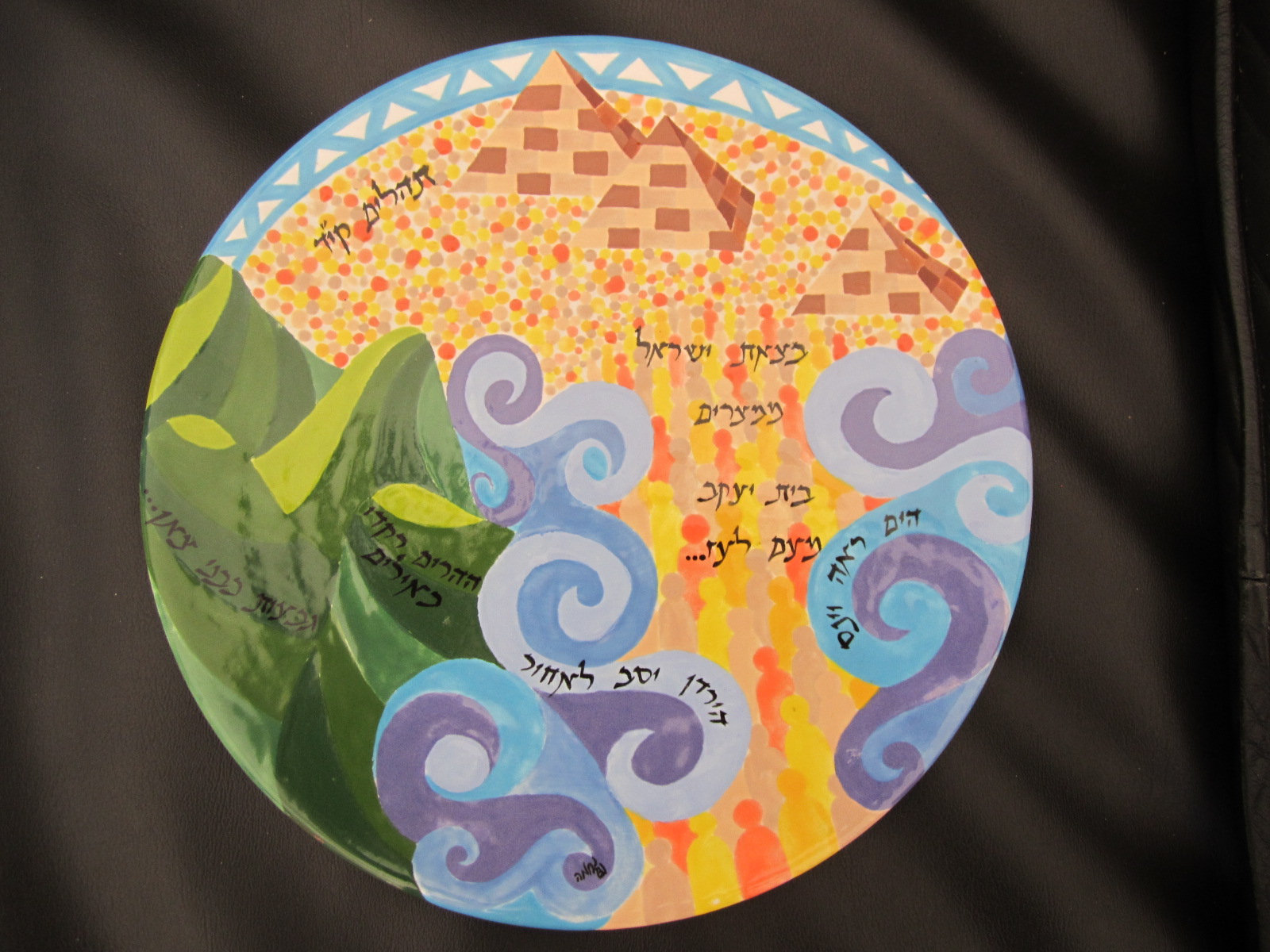
I made this for a friend who wanted a Seder Plate she could also use as a regular plate for the rest of Pesach. The plate illustrates a paragraph from Hallel that describes the rejoicing that took place when Hashem took Bnei Yisrael out of Egypt. It comes with six small bowls that can be placed on the plate for the Seder.
Some thoughts- in general, Hallel is only said during the day. The first night of Pesach is the only time we say Hallel at night. Not only that, but we says it twice- once at Maariv, and once during the Seder itself. Also, the first day of Pesach we say the full Hallel, while the rest of the week we only say half Hallel. There are lots of interesting ideas about the strangeness of Hallel on Pesach. I'll let you figure them out on your own.
I made this for a friend who wanted a Seder Plate she could also use as a regular plate for the rest of Pesach. The plate illustrates a paragraph from Hallel that describes the rejoicing that took place when Hashem took Bnei Yisrael out of Egypt. It comes with six small bowls that can be placed on the plate for the Seder.
Some thoughts- in general, Hallel is only said during the day. The first night of Pesach is the only time we say Hallel at night. Not only that, but we says it twice- once at Maariv, and once during the Seder itself. Also, the first day of Pesach we say the full Hallel, while the rest of the week we only say half Hallel. There are lots of interesting ideas about the strangeness of Hallel on Pesach. I'll let you figure them out on your own.
Thank you to Chaya Solomon for her creative photography
Subscribe to:
Posts (Atom)